Tools

What Materials Can You Drill with a Hammer Drill?

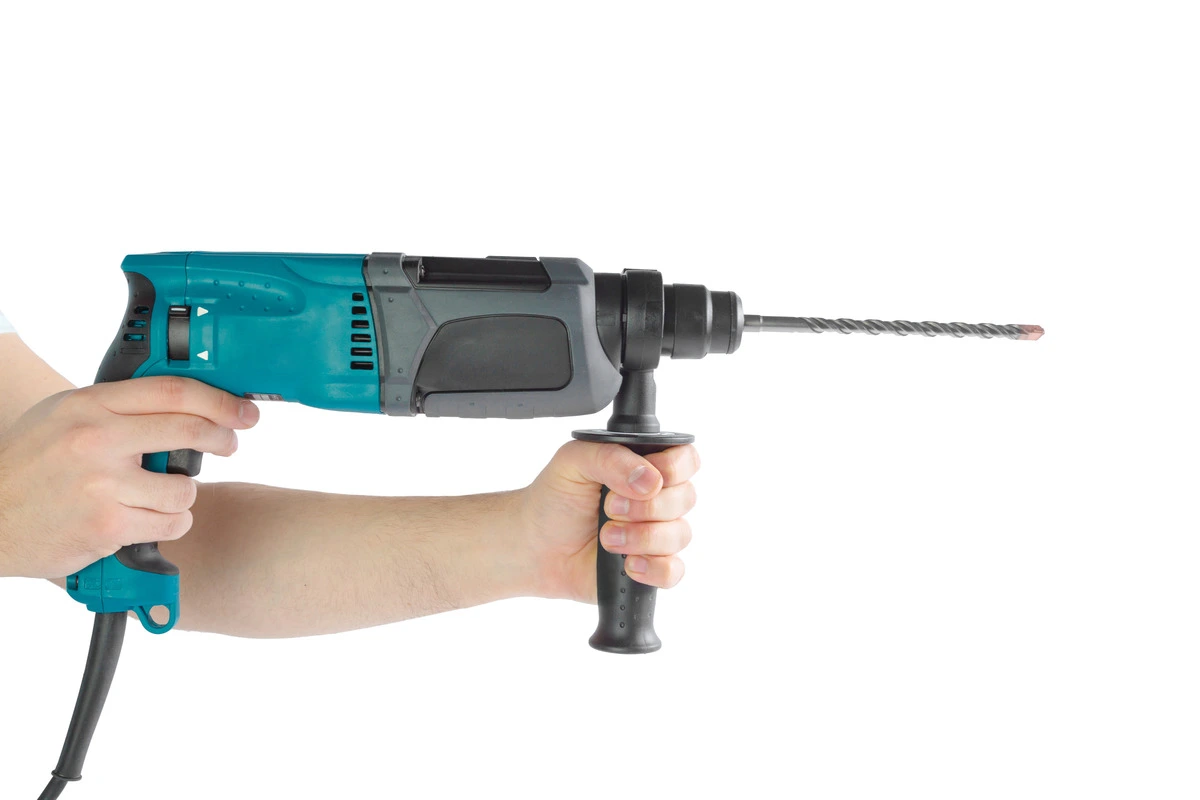
A person holding a hammer drill in the hand on white background

If you’ve ever found yourself standing in a tool aisle wondering whether a hammer drill is the right choice for your next project, you’re not alone. Hammer drills look similar to regular drills, but they serve a very specific purpose: drilling into hard, dense materials.

So what materials can a hammer drill actually handle? Which surfaces should you avoid? And when does it make sense to upgrade to something more powerful, like a rotary hammer?

This guide explains the five main materials you can drill with a hammer drill, along with practical tips, limitations, and best-use practices.

What Is a Hammer Drill?

Before discussing materials, it’s important to understand how a hammer drill works.

A hammer drill combines two movements:

  • Rotary motion: The same spinning action found in a conventional drill
  • Percussive hammering action: Rapid forward pulses—often up to 30,000 beats per minute—that chip away at hard surfaces

This spinning-and-hammering combination allows the drill bit to fracture tough material while clearing dust and debris from the hole.

Because of this design, hammer drills are best suited for hard, brittle, mineral-based materials, particularly those found in masonry and construction work.

1. Concrete

Concrete is the primary material hammer drills are designed to drill.

Why hammer drills work well on concrete

  • The hammering action fractures the cement and aggregate
  • Rotary motion clears debris and advances the bit
  • Carbide-tipped masonry bits can penetrate dense or aged concrete

Types of concrete you can drill

  • Poured concrete slabs (driveways, patios, basements)
  • Concrete walls and pillars
  • Precast concrete blocks
  • Reinforced concrete (up to the point of hitting rebar)

While hammer drills can drill reinforced concrete, progress slows significantly once steel rebar is encountered. For frequent rebar drilling or deep holes, a rotary hammer is a better option.

2. Brick

Hammer drills are highly effective on most types of brick, making them ideal for common household and construction tasks.

Typical uses

  • Hanging shelves on brick walls
  • Installing outdoor fixtures
  • Mounting brackets
  • Running wiring or conduit

Brick is strong but brittle, which makes it well-suited for percussive drilling. The hammering action chips the brick cleanly without excessive resistance.

Brick types compatible with hammer drills

  • Solid brick
  • Face brick
  • Reclaimed brick
  • Engineering brick (dense but manageable)

Some older or decorative bricks are softer and may crumble under aggressive hammering. In those cases, use a lower speed or switch to rotary-only mode for better control.

3. Concrete Masonry Units

Concrete masonry units, also known as cinder blocks, are another material that hammer drills handle extremely well.

CMU characteristics

  • Hollow or partially hollow interior
  • Made from concrete and coal cinders
  • Brittle enough for percussion drilling

When drilling into CMU blocks, you’ll often feel a sudden drop in resistance once the bit breaks into a hollow section. Drilling slowly helps prevent over-penetration or wall blowout.

4. Stone (Soft to Medium Density)

Hammer drills can be used on certain types of stone. However, results depend heavily on density and composition.

Stones suitable for hammer drilling

  • Limestone
  • Sandstone
  • Travertine
  • Slate
  • Manufactured stone veneers
  • Softer granite (depending on density)

Stones not ideal for hammer drills

  • Very dense granite
  • Marble (high risk of cracking)
  • Quartzite
  • Basalt or volcanic stone

For extremely dense natural stone, a rotary hammer or core drill is the safer and more effective choice.

5. Mortar

Mortar is softer than brick or stone, which makes it one of the easiest materials to drill with a hammer drill.

Common applications

  • Preparing for repointing work
  • Installing pipes or conduits
  • Running cables
  • Creating anchor points
  • Removing old mortar during renovations

Many professionals prefer drilling into mortar instead of brick because it reduces the risk of damaging masonry units, and it is easier to patch or repair later.

Materials You Should NOT Drill in Hammer Mode

Although hammer drills are powerful, they are not universal tools. Using hammer mode on the wrong materials can damage both the surface and the drill.

Avoid hammer mode on:

  • Wood: Causes splintering and rough holes
  • Metal: Destroys bits and produces unsafe results
  • Plastics: Leads to cracking or shattering
  • Glass: Extremely vibration-sensitive
  • Ultra-dense stone: Requires heavier-duty tools

For these materials, always switch to rotary-only mode or use a different tool entirely.

Choosing the Right Drill Bit

The effectiveness of a hammer drill depends heavily on the bit you use.

Masonry Drill Bits

Carbide-tipped masonry bits are ideal for:

  • Concrete
  • Brick
  • Stone
  • Mortar

SDS Bits (If supported)

Some hammer drills support SDS bits, which are excellent for:

  • Reinforced concrete
  • Natural stone
  • Precision anchoring

Tile Bits

Use carbide or diamond tile bits and start in rotary-only mode to prevent cracking.

Pilot Bits

Pilot or starter bits help prevent slipping on hard surfaces like stone or tile.

woman-using-hand-drill-assemble-wooden-table

Hammer Drill vs. Rotary Hammer: When to Upgrade

Use a hammer drill when:

  • Drilling holes up to 1/2 inch
  • Working with brick, block, or mortar
  • Performing light-duty anchoring

Use a rotary hammer when:

  • Drilling larger or deeper holes
  • Working extensively with reinforced concrete
  • Chiselling, tile removal, or light demolition

Final Thoughts

A hammer drill is a powerful and versatile tool, but it has to be used on the right materials. It performs best on concrete, brick, cinder block, mortar, and certain types of stone, delivering cleaner holes, better efficiency, and safer operation than a standard drill.

Hammer mode should not be used for wood, metal, plastic, glass, or ultra-dense stone. Incorrect usage won’t just slow you down; it can damage your material, your drill bits, and the tool itself.

Remember this simple rule: a hammer drill is a specialist for masonry. When used where it excels, it easily outperforms a regular drill, making tough jobs significantly easier.