

Blog
Air Hammer 101: What It Does, How It Works, and When to Use It

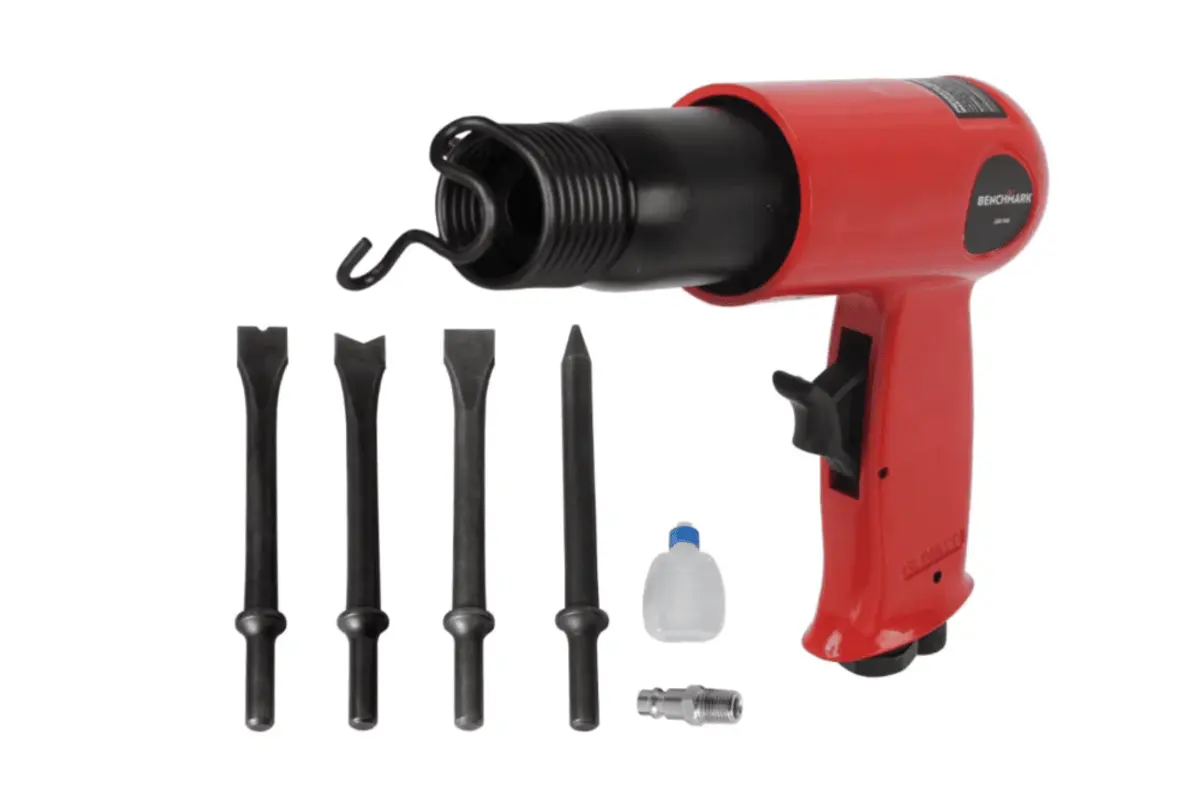
You’ve finally got your hands on an air compressor. You are feeling proud, maybe a little curious, and now everyone’s talking about air hammers, calling them powerful, fast, and fun. But what do they actually do? And more importantly, do you really need one?
This guide has you covered. By the time you’re done, you’ll know what an air hammer is, how it works, and when it’s worth using. No complicated jargon or technical overload.
We’ll explain just the essentials to handle the tool confidently without overthinking it.
What Is an Air Hammer?
An air hammer is a pneumatic tool that delivers fast, repeated blows using compressed air. It’s like the mechanical version of a traditional hammer, only much faster and louder. Instead of swinging by hand, the hammering action comes from bursts of air pressure driving a piston inside the tool.
The magic lies in its versatility. You can attach different bits or tips depending on the job. There are chisels for cutting through sheet metal, punches for driving out pins or rivets, and cutters for slicing through exhaust pipes or stubborn bolts. Some people even use blunt tips for shaping metal.
In short, it is a hammer that works faster than any human ever could. It turns raw air pressure into a steady stream of impacts and the result is speed and power with minimal effort.
How It Works
Every air hammer runs on the same basic principle. Compressed air enters the tool through a hose connected to your compressor. When you pull the trigger, that air moves a piston back and forth inside the barrel. The piston strikes the back of the bit repeatedly, and the bit transfers that force to your work surface.
The whole process happens several times per second, and that is why the air hammer sounds like a small jackhammer. It is controlled chaos, but a good kind.
A few things affect how well it performs. The two big numbers are CFM (cubic feet per minute) and PSI (pounds per square inch). These measure how much air the compressor can deliver and how much pressure it maintains. A small air hammer might work fine at 90 PSI, while heavy-duty versions need more.
The trigger sets the pace. A light squeeze delivers soft, controlled taps, while a firm pull unleashes the hammer’s full power. This flexibility lets you start gently and ramp up the force when a stubborn part won’t give in.
You do not need to understand every detail of the mechanics to use one. Just get familiar with that air that goes in, the piston moves fast, and the result is a rapid-fire stream of hits that make tough jobs easier.
What It Is Used For
This is where the air hammer earns its keep. It handles a surprising range of jobs, especially when paired with the right attachments.
Cutting through sheet metal or exhaust systems
If you have ever tried cutting old exhaust pipes by hand, you know the pain. The air hammer turns that struggle into a quick, satisfying job. Attach a chisel bit and slice through metal like butter. It is also handy for cutting body panels or trimming thin steel when working on cars or small machinery.
Chipping off rust or welds
Rusty bolts and thick weld beads can feel like enemies that never quit. An air hammer with a pointed chisel can knock off corrosion, scale, and excess weld in seconds. The quick strikes break the bond without wearing out your arms. Just be ready for the noise.
Removing ball joints, bushings, and rivets
Automotive work often calls for brute force in tight spots. When you need to push out ball joints or rivets, the air hammer saves time and frustration. A punch tip does the trick. It drives the piece free with short, controlled bursts instead of endless hammer swings.
Construction and demolition work
Air hammers are great for light demolition. They can chip away at tile, remove old mortar, or break up small sections of concrete. In these cases, they act like miniature jackhammers, giving you enough power to handle medium jobs without dragging in huge equipment.
Basically, if the task involves breaking, cutting, or freeing something that refuses to move, an air hammer is worth grabbing.
When to Use It and When Not
Despite its power, an air hammer is not the right choice for every job. It shines in some areas and struggles in others.
When to use it
Use an air hammer when you need speed and impact. If you are dealing with stuck parts, tough materials, or anything that would normally require a heavy hammer, it is your best friend. The tool delivers hundreds of hits per minute, so even hard materials eventually give in.
It is also ideal when you need a consistent force. Unlike hand tools, the air hammer keeps delivering power until the job is done. No sweat, no fatigue, just results.
When not to use it
Air hammers are not precision tools. They hit fast and they hit hard. If you need to make delicate adjustments or protect finished surfaces, look elsewhere. The same power that makes them effective can also cause damage if used carelessly.
They are also very noisy. Always wear ear protection. Add safety glasses and gloves too, since chips and metal fragments can fly around like confetti at a parade.
Another important tip is to match the bit to the job. Using the wrong attachment can damage both the tool and the material. Most manufacturers include a small set of bits, but you can always expand your collection as you gain experience.
Finally, remember that air hammers need steady airflow. A weak compressor will make it sputter instead of strike. Check your compressor’s output and use a hose that allows enough air to reach the tool.
Conclusion
An air hammer may look intimidating, but once you understand it, the tool becomes one of the most useful additions to any workshop. It is powered by compressed air, uses a piston to deliver rapid impacts, and handles jobs that would wear out your arms in minutes.
You can cut, chip, or break through tough materials without breaking a sweat, thus it is perfect for automotive repairs, metalwork, and small demolition projects. Just remember that it is not built for fine detail - it is the muscle, not the scalpel.
If you already own an air compressor, adding an air hammer opens a whole new world of possibilities. It is loud, it is powerful, and it gets things done. In the right hands, it is a time-saving workhorse that pays for itself in effort saved.