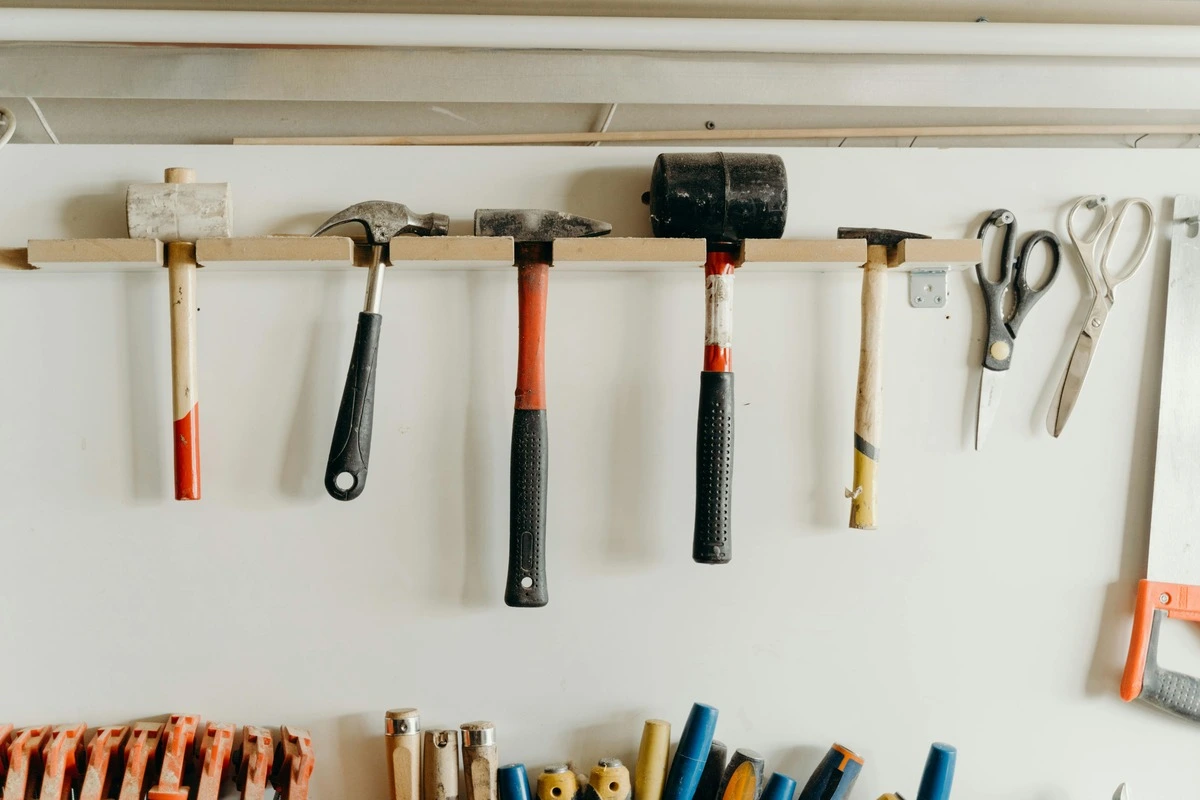
1. Saves Money in the Long Run
One of the biggest selling points is the potential savings. Traditional hammers wear out over time, heads chip or deform, handles break or loosen, and the entire hammer may need replacing. With a replaceable head hammer, you can theoretically replace just the worn head, which tends to be cheaper than buying a whole new hammer.
For casual users or those who frequently switch between hammer types (e.g., rubber mallet to steel claw hammer), this can mean fewer purchases and less clutter.
2. One Handle, Many Jobs
With heads made of steel, brass, rubber, or plastic, you can tackle everything from framing to furniture assembly:
- Steel heads for heavy-duty framing or demolition.
- Brass or copper heads for delicate work that won’t spark or damage surfaces.
- Rubber or plastic heads for assembling furniture or tapping tiles without marring them.
Basically, it’s a multitool disguised as a hammer.
3. Reduced Waste and Environmental Impact
In theory, swapping out just the head reduces overall waste, since the handle (which often contains more materials and complex manufacturing processes) lasts longer. For environmentally conscious consumers, this can be an attractive feature.