

Blog
Rotary Hammer vs Hammer Drill: What’s the Difference

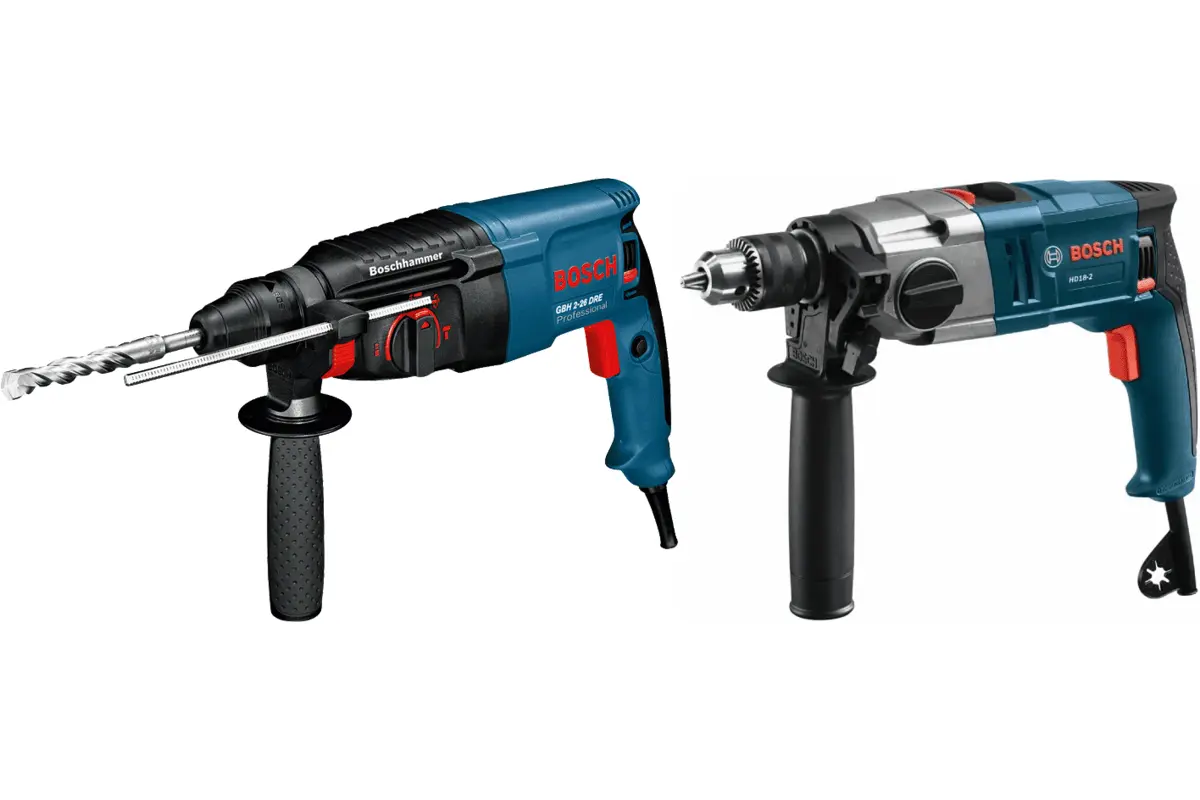
Ask any builder what they use to drill into concrete and you will usually hear they mention two tools: the rotary hammer and the hammer drill.
One uses a piston that provides powerful, consistent blows, while the other relies on rapid vibrations to chip away at the surface. That single difference defines how each one performs and which jobs they are best suited for.
So, how do they actually work? Let’s start with the one most people know best.
Hammer Drill
A hammer drill is basically a regular power drill with an added impact feature. Inside, a small clutch mechanism generates a rapid hammering action that works alongside the drill’s rotation so as the bit spins, it also moves back and forth at high speed.
When you use one, you can feel that distinctive vibration and hear a gritty buzz as it chips its way through materials like brick or mortar. Instead of relying on sheer force, it uses fast tapping to help the bit bite into tough surfaces.
A hammer drill is ideal for light masonry work, like drilling into brick walls, concrete blocks, or mortar when installing shelves, fixtures, or anchors. They’re also handy for general use since you can switch off the hammering mode and use the drill normally for wood, plastic, or metal.
But when light tapping isn’t enough, that’s when a rotary hammer steps in.
Rotary Hammer
If the hammer drill feels like a regular drill with a little extra punch, the rotary hammer is like a completely different machine. Every strike delivers actual force through a piston-powered system.
Instead of vibrating rapidly, the piston delivers powerful blows. You’ll notice deep, rhythmic thuds instead of fast chatter which is great for dense materials like concrete, stone, or reinforced slabs.
Rotary hammers are heavier, but that extra weight works in your favor. They’re built to handle serious work with less effort. Many models also include multiple modes: drilling, hammer drilling, or hammer only for light demolition.
Now that we’ve covered how they work, let’s see how they perform in the real world.
Difference in Power & Performance
Both tools have the same goal, but the way they do it is different.
Inside a hammer drill, a mechanical cam system creates vibration while it relies on high speed and user pressure. Inside a rotary hammer, the piston generates impact energy that transfers directly to the bit.
A rotary hammer gets through material faster with less effort since the piston does most of the work and since it pushes on its own, you don’t need to lean into it hard. A hammer drill, by contrast, needs steady downward pressure to perform well.
A hammer drill vibrates quickly and makes a sharp rattling sound, while a rotary hammer hits slower and heavier. The rotary hammer cuts faster, resists overheating, and sends less vibration back to your hands.
Knowing which one fits your job is what really counts. Here’s how to choose between them based on what you’re drilling into.
Choosing the Right Tool for Your Project
Choosing between these tools depends on what kind of material you are working with and how often.
A hammer drill works well for smaller home projects: putting up shelves, running cables, or drilling in brick and mortar. It’s lightweight, cheap, and simple to handle.
If you regularly tackle reinforced concrete, stone, or dense materials, the rotary hammer is your best bet. It drills faster, creates cleaner holes, and spares your arms. Plus, it doubles as a light chisel when needed.
If you’re hanging shelves, grab a hammer drill. If you’re breaking through concrete, you need a rotary hammer.
Comfort, Control, and Practical Details
Hammer drills are compact and easy to maneuver, great for overhead work or tight spaces but their vibration can wear you out if you’re drilling multiple holes.
Rotary hammers are heavier, but their design spreads weight evenly and reduces shake. Padded grips absorb recoil, making long jobs easier.
One small but important detail: the drill bits.
Hammer drills use standard bits in a regular chuck, which are cheap and easy to find. Rotary hammers go for SDS or spline-style bits that click firmly into position. That setup stops slipping and lets you switch out bits fast. No chuck key needed.
Now let’s move to practicality: price, durability, and the upkeep over time.
Price, Maintenance, and Everyday Use
A hammer drill usually costs less and will handle everyday tasks around the house or small jobs you might do for work.
Rotary hammers run pricier, but they’re an investment for people who drill into hard materials regularly. You’re paying for sturdier parts, stronger impact, and a tool that’ll last much longer.
In terms of upkeep, hammer drills don’t need much. Just wipe them down, swap in fresh batteries and use good quality drill heads. Meanwhile, rotary hammers demand extra care since they’ve got inner pistons and seals that wear. A bit of lubrication and occasional servicing goes a long way.
By now, you can probably tell that both tools have their place. To wrap things up, let’s look at how to decide which one deserves a spot in your toolbox.
Key Takeaways
They share a name, but not a purpose. The hammer drill handles the light work; the rotary hammer does the heavy lifting.
Instead of just spinning like regular drills, the hammer drill pounds while it turns, so brick or wood won’t slow it down. Great around the house, handles most tasks without swapping gear. The rotary hammer is built for punching fast into concrete, rock, or hard materials. Heavier than most tools, costs more too, yet when it comes to thick brickwork, nothing beats it.
If you’re handling occasional home updates, get a hammer drill. But If your work involves constant concrete or hard materials, invest in a rotary hammer.
Think of it this way: the hammer drill is the all-rounder for small jobs and the rotary hammer is the heavyweight that does the real breaking. Pick the one your project deserves.